
Kearneys Spring, Toowoomba, 4350, QLD
Call to book an appointment
Kearneys Spring, Toowoomba, 4350, QLD
Australia has one of the highest rates of skin cancer in the world. Anyone can develop skin cancer, although individual risk varies. Becoming familiar with your skin can help you notice new or changing spots. Speak with your GP if you notice a concerning change or would like advice about your individual risk and whether a professional skin examination may be appropriate.
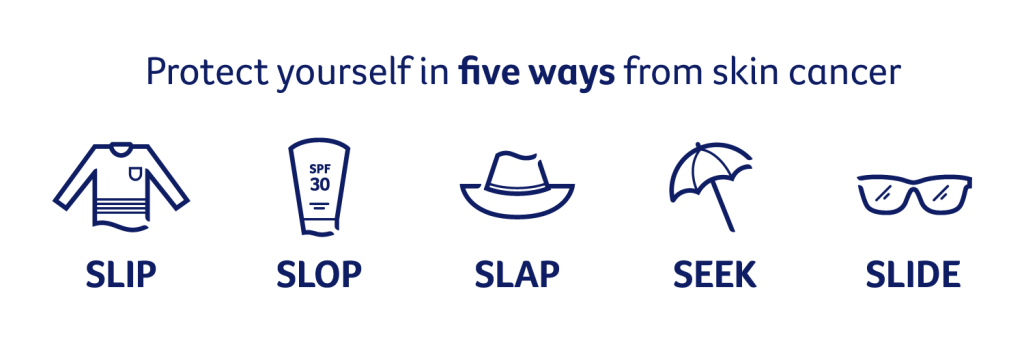
There are 5 simple ways to protect yourself from the sun:
There are many different types of skin cancer, each of which can look different on the skin.
If you have noticed something unusual on your skin that might suggest skin cancer, such as; crusty non-healing sores, small lumps that are red, pale or pearly in colour, new spots, freckles or any moles changing colour, thickness or shape over a period of weeks to months, it is very important to see your GP as soon as possible.
Don’t try to identify a skin cancer on your own, your GP is experienced at identifying problem areas. Your GP may need to take a small punch biopsy to send for testing. Further steps will be advised once you have a diagnosis.
Treatment for skin cancer depends on factors including the type, size, location and stage of the cancer, as well as the patient’s individual circumstances. Treatment may include surgery, topical medication, cryotherapy, curettage, radiotherapy or referral to another healthcare professional. Your doctor will discuss the treatment options, potential risks and expected outcomes relevant to you.
Doctors consulting at Westridge Medical provide skin examinations and can assess concerning spots or changes. Where clinically appropriate, further investigation may include a biopsy, treatment or referral to another healthcare professional. Patients at higher risk of skin cancer can discuss an appropriate monitoring plan with their doctor.

Be Sun Smart. Remember to Slip on sun protective clothing, Slop on your sunscreen, Slap on a hat, Seek Shade and Slide on some glasses!
Please contact Westridge Medical on 07 4636 6884 to book an appointment for a Skin Check.